
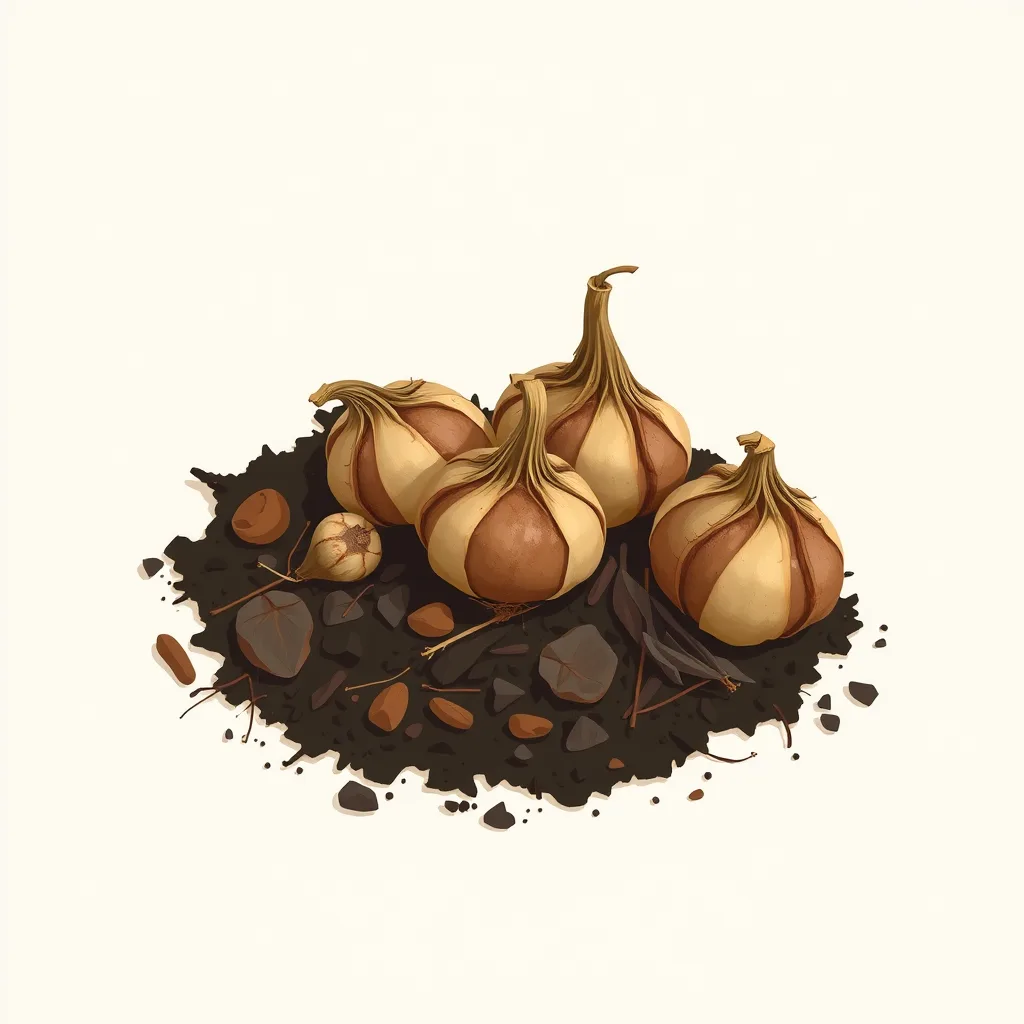
Plant tulip bulbs in North Carolina once soil at planting depth drops below 60°F: October in the mountains, November or early December in the Piedmont and coastal plain, per NC State Extension’s Gardener Handbook. That zone-keyed rule sits at the center of this state’s stretch of the planting calendar, and it produces something worth checking before assuming a single statewide date: in two of NC’s three regions, the recommended window runs right up to, and past, the average date of the first hard freeze.
When to Plant, Set, or Bed In Tulip Bulbs Across North Carolina
Setting out tulip bulbs in North Carolina, whatever a gardener calls the step, bedding in, setting, or planting, comes down to one published rule read three ways by region. NC State Extension’s Gardener Handbook states it directly: “In general, it is advisable to wait until the soil temperature is below 60°F (at the optimal planting depth). The optimal planting time in Zone 6 is October. In Zones 7 and 8, it is better to wait until November or early December.” NC State’s Wayne County Cooperative Extension office restates the same trigger, noting that “spring-flowering bulbs are planted in November, typically when the soil temperature has dropped below 60°F.” Tulip bulb planting in NC is not one statewide date; it is a single soil-temperature threshold reached earliest in the mountains and weeks later in the Piedmont and coastal plain. The table further down pairs those months against named NOAA stations in each region.
Is Mid-December Too Late to Plant Tulip Bulbs in Coastal NC?
Not necessarily, but there is little room left by then. NC State’s published window for Zone 8, which covers coastal North Carolina, runs into “early December,” read here as roughly December 7, the kind of stated reading a table needs when a source gives a month rather than a date. Wilmington’s average first hard freeze, a 28°F reading from NOAA/NCEI’s 1991-2020 normals, arrives December 3, four days before that. Mid-December sits past both benchmarks. Compare that to when to plant tulips in Zone 6: the mountains’ window closes at the end of October, more than a week ahead of Asheville’s own hard freeze normal. Coastal NC’s later window is real and it is NC State’s own published figure, but it leaves far less buffer than the mountain window does, and by mid-December that buffer is gone.
Why Tulip Bulbs Planted Too Early in NC Fail to Bloom
Tulip bulbs not blooming the following spring often trace back to a start that came too early, not too late. NC State’s Plant Toolbox entry for Tulipa states the bulb is “intolerant of heat and loses floral vigor when soil temperatures reach 70 degrees F,” the same logic behind the 60°F trigger from the other direction: soil that has not yet cooled past the mid-60s is still well above where a tulip bulb functions well. A bulb set into soil that warm sits closer to summer storage than to a planting bed, and NC State’s cold-requirement figure, six to 20 weeks depending on species or cultivar, cannot begin accumulating until real cold arrives, regardless of planting date. Tulip bulbs planted too early do not get a head start; they mostly sit longer in warmth that does nothing for them, a separate risk from tulip bulbs rotting in warm soil, a moisture-and-heat combination the same too-warm window makes more likely.
Tulip Planting Month by Month in NC, October Through Early December
Read NC State’s zone-keyed calendar as a month-by-month tulip planting calendar for North Carolina and it breaks into three bands rather than one statewide window:
- October, mountains (Zone 6). Soil here cools past 60°F earliest in the state, consistent with the mountains carrying the earliest average hard freeze of the three regions.
- November, Piedmont and coastal plain (Zones 7 and 8). The core of NC State’s published window for the state’s two warmer zones.
- Early December, Piedmont and coastal plain. The tail of the same window, read here as running to roughly December 7.
Tulip bulbs in December planting is workable only in this tail stretch and only in the warmer two-thirds of the state; it is not part of NC State’s Zone 6 window at all.
Count Back From NC’s First Hard Freeze to Know When to Plant Tulip Bulbs
The widely repeated shortcut here, counting six to eight weeks back from a first hard freeze, has no source behind it for this state. NC State Extension’s Gardener Handbook chapter on bulbs, its Plant Toolbox entry for Tulipa, and the Wayne County Cooperative Extension bulb page were each checked directly for a count-back rule, and none of the three states one. What all three publish instead is the soil-temperature trigger and zone-keyed months already covered above, plus one further sentence from the handbook: “Root growth starts in the fall and continues through the winter.” That is the closest thing NC State offers to a timing mechanism, and it describes a process running through the cold months rather than a fixed span of weeks before a frost date. So the answer to how to know when to plant tulip bulbs in NC is the soil reading, not a frost-date count-back: the first frost NOAA/NWS normals publish (32°F, an air reading) marks a different, earlier event than a hard freeze, and neither one is the trigger NC State actually recommends watching.
How Long Does It Take Tulip Bulbs to Root Before Winter?
No separate week count for tulip bulb rooting time appears on the three NC State pages checked for this article; the handbook’s fall-through-winter rooting language, covered above, is the closest it comes. NC State’s material supports planting early inside the sourced 60°F window rather than waiting for its close, so a bulb gets as much workable fall soil as the calendar allows. The canonical guide to tulip bulb timing works through how rooting relates to the chilling requirement in more depth; for North Carolina, neither figure is published as a week count.
What Happens If You Plant Tulip Bulbs After the Ground Freezes
Planting tulip bulbs too late, after soil has locked up for the season, cuts short the fall-through-winter rooting process covered above before it gets going. Late tulip bulb planting results, where a bulb goes in but never develops much of a root system before dormancy, tend to show up the following spring as a weak or absent bloom stalk rather than an obvious failure at planting time. Tulip bulbs planted in frozen ground cannot be worked into soil that has already set, which is why NC State’s published windows close before winter rather than running through it. Neither NC State’s Gardener Handbook nor NOAA/NCEI’s 1991-2020 station normals give a date for when NC ground itself actually freezes; the hard-freeze normals below are air-temperature readings at a weather station, a different and earlier event.
Soil Cooldown Table: Working Back From NC’s Ground Freeze Dates
North Carolina’s own ground-freeze date is not published in the Gardener Handbook, the Plant Toolbox, the Wayne County page, or NOAA/NCEI’s station normals. What NOAA does publish is the average date each region’s air first drops to 28°F, a hard freeze, at one representative station per region. Pairing that against NC State’s zone-keyed planting window produces a table neither program publishes on its own, and it is the closest thing here to a north carolina ground freeze date table:
NC Soil Cooldown and Ground Freeze Table, by Region
| NC region | Station | USDA zone (label only) | NC State’s published window | First fall 32°F | First fall 28°F (hard freeze) | Days from window close to the 28°F normal* |
|---|---|---|---|---|---|---|
| Mountains | Asheville Rgnl Ap | Zone 6 | October | Oct 28 | Nov 8 | +8 (window closes before) |
| Piedmont | Raleigh Durham Intl Ap | Zone 7 | November or early December | Nov 4 | Nov 16 | -21 (window closes after) |
| Coastal plain | Wilmington Intl Ap | Zone 8 | November or early December | Nov 20 | Dec 3 | -4 (window closes after) |
*This last column is this site’s own arithmetic, not a figure NC State or NOAA publishes together. “Early December” is read as December 7 for the calculation, the same kind of stated reading used wherever a source gives a month rather than a date. A positive number means NC State’s window closes before the region’s hard-freeze normal; a negative number means it closes after.
The finding worth sitting with is the sign change. In the mountains, the window closes more than a week ahead of the hard freeze, a comfortable margin. In the Piedmont and on the coast, the window as NC State states it runs 21 and 4 days past the hard-freeze normal. That is not an error in NC State’s guidance; a 28°F air minimum does not freeze the ground in those two regions, so planting can continue safely after that date even with the air already at hard-freeze territory. A reader who treats “hard freeze” as “the ground is closed for the season” gets North Carolina backwards. Three caveats belong with this table: all three freeze figures are air temperatures at one station, not a ground-freeze reading; the gap between a hard freeze and the ground beginning to freeze is not published for any NC location; and one station cannot speak for an entire region’s microclimates.
Tulip Bulb Chilling Requirement in Plain English for Warm NC Zones
Tulip bulb chilling requirement figures do not agree even within North Carolina’s own extension system, which matters for gardeners asking whether they need cold treatment before planting in the state’s warmer zones. NC State’s Gardener Handbook gives the widest range: “The cold requirement ranges from six weeks to 20 weeks depending on the species or cultivar.” NC State’s own Wayne County page states a narrower figure, “12- to 16-week chilling period,” and Clemson HGIC, writing for a similarly warm Southeastern climate, publishes the same 12- to 16-week range. So one program carries two different numbers on two of its own pages: a wide, species-dependent range in the handbook and a narrower, single figure at the county level. The handbook’s wording, tied explicitly to species and cultivar, reads as the more careful of the two.
Pre-chilling tulip bulbs meaning, in plain terms, is refrigerating them before planting to supply artificially the cold a warm winter soil will not deliver on its own. No source among the pages checked for this article measures how many weeks of cold any NC region’s soil actually delivers: the six-to-20-week figure is a requirement of the bulb, not a measurement of NC soil, and attaching it to the mountains or the coast would be this site’s own guess, not a published figure. What NC State does publish for the state’s warmer zones is a reflowering record, not a soil-chill reading: the handbook states tulips were “treated primarily as annuals in the South” because few if any flowered the second year, calling the tulip “a short-lived perennial at best” there. That reflowering record, not a soil-chill measurement, is the sourced reason some tulip bulbs, sometimes searched as tullip bulbs, do not reliably come back in eastern North Carolina. Related bulbs on this site’s fall bulb planting calendar and the crocus planting guide follow their own timing, and a gardener moving north will find a longer natural chilling season in Pennsylvania’s tulip timing guide.
Frequently Asked Questions
Can I plant tulip bulbs in NC without pre-chilling them first? NC State does not publish a week count for how much cold any NC region’s soil actually delivers, so there is no sourced answer by region. What NC State does publish: the Gardener Handbook’s cold requirement runs six to 20 weeks depending on species or cultivar, and the same handbook states tulips were “treated primarily as annuals in the South” because few if any flowered the second year, calling the tulip “a short-lived perennial at best” there. That reflowering record, from Piedmont and coastal experience (Zones 7 and 8), is the sourced sign that a warm-zone winter often comes up short of the bulb’s own cold requirement. NC State publishes no equivalent statement for the cooler, longer mountain winter (Zone 6).
Do tulip bulbs come back every year in North Carolina? Not reliably. NC State Extension’s Gardener Handbook states that tulips were traditionally treated as annuals in the South because few, if any, flowered a second year, calls the tulip a short-lived perennial at best, and rates a cultivar a success if it reflowers for three years running.
Should tulip bulbs go in raised beds in coastal NC? None of the three NC State pages behind this article, the Gardener Handbook chapter, the Plant Toolbox Tulipa entry, or the Wayne County page, single out raised beds. The one rule they do publish, plant three times the bulb’s depth measured from its base, applies the same whether that soil sits at grade or is mounded inside a raised frame. Whether a raised bed reaches NC State’s 60F soil trigger faster or slower than ground-level soil nearby is a comparison none of the three pages measure.
Can tulip bulbs handle a partly shaded spot in NC? A shade rating for tulip is not part of the material checked on those same three NC State pages. What is published is the heat-intolerance limit covered above, from NC State’s Plant Toolbox entry for Tulipa, so a site that stays cooler into late spring, shaded or not, works in the bulb’s favor rather than against it.
How deep should tulip bulbs be planted in NC clay soil? NC State’s Plant Toolbox entry for Tulipa gives the depth rule as three times the depth of the bulb, measured from its base. No separate clay-soil adjustment to that depth appears on the pages checked for this article, so the published figure is the same regardless of soil type.
Sources
- NC State Extension, Extension Gardener Handbook, Herbaceous Ornamentals (bulbs subsection): 60F soil trigger, Zone 6/Zones 7-8 planting months, six-to-20-week cold requirement, fall-through-winter rooting statement, tulip-as-annual-in-the-South material.
- NC State Extension, Plant Toolbox, Tulipa: three-times-bulb-depth planting rule, heat intolerance above 70F.
- NC Cooperative Extension, Wayne County, Jessica Strickland (30 Oct 2025): November soil-below-60F restatement, 12- to 16-week chilling figure.
- Clemson HGIC, Spring-Flowering Bulbs: the competing 12- to 16-week chilling figure, reported alongside NC State’s own two figures.
- NOAA/NCEI 1991-2020 Climate Normals: first fall 32F and 28F normals at Asheville Rgnl Ap, Raleigh Durham Intl Ap, and Wilmington Intl Ap.
Last verified: 2026-08-17, against NC State Extension’s Gardener Handbook Herbaceous Ornamentals chapter (bulbs subsection), its Plant Toolbox entry for Tulipa, the Wayne County Cooperative Extension bulb page, Clemson HGIC’s Spring-Flowering Bulbs factsheet, and NOAA/NCEI 1991-2020 Climate Normals for the three named stations.