
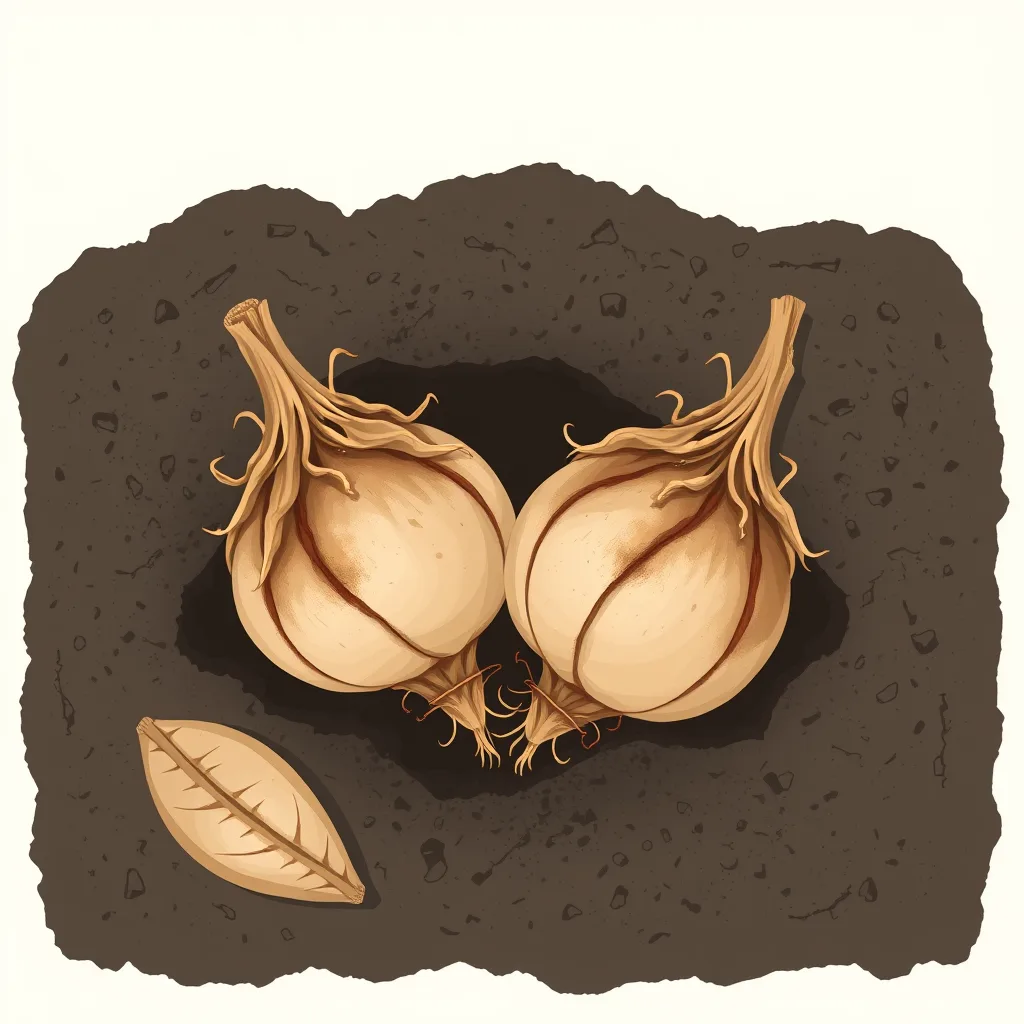
Plant naked lady bulbs in early fall, while they sit dormant in the gap between their spring foliage and their leafless late-summer flower stalk, per Iowa State Extension. Depth is where the sourced guidance splits: Iowa State gives 5 to 6 inches, NC State Extension gives 8 to 12 inches, close to double. That gap, not a soil-temperature trigger no program actually publishes for this species, is the real sourced answer to how deep this bulb goes. The window sits inside the wider planting calendar this site tracks state by state, and Lycoris squamigera runs its phenology backward from most fall bulbs.
When to Plant, Set, or Bed In Naked Lady Bulbs by Zone
Plant, set, or bed in, whatever term a gardener uses for the task, naked lady bulbs share one clear planting season, though the two programs behind this article disagree sharply on how deep that planting should go. Iowa State Extension’s Surprise Lilies page states plainly to “plant bulbs in early fall.” That timing works because the bulb is dormant then: NC State Extension’s Plant Toolbox entry for Lycoris squamigera describes foliage emerging in late winter to early spring and dying away by late spring, followed by a leafless stalk that rises in late summer to fall. Early fall planting lands in the quiet stretch after that bloom stalk and before winter, when the bulb is neither growing leaves nor sending up a flower.
“By zone” needs a caveat, covered in full further down: NC State’s hardiness listing of zones 5a to 9a is a survival range, the coldest and warmest winters the bulb tolerates in place, not a month-by-month calendar keyed to zone number. This differs from other fall bulbs on this site’s tulip bulb timing for North Carolina or the crocus planting guide, both of which go into cooling autumn soil as a true dormant bulb waiting out winter. Naked lady bulbs are planted during a summer dormancy instead, a different point in the calendar even though the season, fall, is the same word.
Can You Still Plant Naked Lady Bulbs in September?
Yes, in most of the country September sits inside Iowa State’s “early fall” window, since the bulb goes into the ground dormant and well before the soil freezes. What NC State does publish is a hard boundary worth planning around: the bulbs “suffer cold injury when temperatures drop below 28 degrees Fahrenheit.” That figure describes cold tolerance once established, not a planting-day rule, but it marks the winter severity a newly planted bulb needs to be settled in before, and it is a more specific number than a USDA zone label gives on its own.
Why Naked Lady Bulbs Sometimes Skip Blooming the First Year
A specific, sourced reason exists, and it is narrower than it first sounds. NC State Extension’s Plant Toolbox entry states that Lycoris squamigera “will not bloom the first year after being divided since the bulbs need to establish new roots.” That sentence describes dividing an established clump, digging up a mature planting and separating it into new bulbs, not a bulb purchased and set into new ground for the first time. Whether a freshly planted, undivided bulb also skips its first bloom season goes unaddressed on the pages behind this article. The sourced mechanism, rebuilding a root system before flowering resumes, applies specifically to division; treating it as a rule for every new planting goes beyond what NC State’s own wording says.
Naked Lady Bulb Planting Calendar, July Through October
What follows pairs Iowa State’s single planting season with the plant’s own documented phenology into a month-by-month view. July is bloom season, not planting season: Illinois Extension places bloom stalks “near the end of July,” appearing with no foliage present. August often continues that bloom window, since NC State describes flowering running “in late summer to fall.” Iowa State’s “early fall” recommendation places the actual planting task in September and into October, after the bloom stalks have finished and the bulb has returned to dormancy. A gardener working from nursery availability rather than a fixed date should watch for this same sequence: flower stalks first, a return to bare ground, then planting.
Count Two to Three Weeks After Naked Lady Foliage Dies Back to Plant
This specific week count is not one either Iowa State Extension or NC State Extension publishes; no source behind this article states a fixed number of weeks between foliage die-back and planting. What is documented lines up with the general idea behind it. NC State reports foliage dying away in late spring; Illinois Extension is more specific, noting the foliage “withered and died as the hot weather of summer arrived in early June.” Iowa State’s recommended planting season, early fall, falls well after that early June die-back, past any two-to-three-week mark. The die-back itself is a real, sourced signal that the bulb has entered its summer dormancy; the actual wait before planting reads closer to a season than to a couple of weeks.
How Long Does It Take Naked Lady Bulbs to Send Up a Flower Stalk?
For an established, undivided bulb, the sourced timing points to once a year: NC State describes the bloom stalk emerging “in late summer to fall,” and Illinois Extension pins typical stalks to “near the end of July.” Neither source publishes a separate timeline for how long a newly planted bulb takes to reach its first bloom, so that specific gap between planting and a first flower goes unaddressed. The one figure that does bear on new plantings is the division rule covered above: NC State states a bulb that has just been divided skips blooming the following year while it rebuilds roots.
What Happens If You Plant Naked Lady Bulbs Too Shallow
The honest answer starts with a question the two main sources disagree on: shallow compared to what? Iowa State Extension’s recommended depth is 5 to 6 inches. NC State Extension’s recommended depth is 8 to 12 inches, close to double. A bulb planted at Iowa State’s own 5 to 6 inches would read as shallow by NC State’s standard, while the same bulb sits well inside spec by Iowa State’s. The closest bound either program gives is NC State’s cold-injury threshold, 28 degrees Fahrenheit, a temperature a shallower bulb would logically reach sooner than a deeper one. Planting toward the deeper end of the two published figures leaves more buffer before that threshold; the shallower end is genuinely published by Iowa State, not unsourced, but it leaves less room before winter cold reaches the bulb.
Naked Lady Bulb Timing by USDA Zone, Zone 4 Through Zone 10
A true zone-by-zone planting window, the kind built for other bulbs on this site, does not exist for this species in the pages checked. NC State Extension publishes a hardiness range, zones 5a to 9a, describing where the bulb survives winter once established, not a planting date tied to zone number. That range also falls short of the full Zone 4 through Zone 10 span often searched: it starts a half zone warmer than Zone 4 and stops before Zone 10 on the warm end.
What the two Tier-1 programs behind this article actually publish, compared side by side.
| What the source publishes | Iowa State Extension | NC State Plant Toolbox |
|---|---|---|
| Planting season | Early fall | Not stated as a separate line; consistent with early fall timing described above |
| Planting depth | 5 to 6 inches | 8 to 12 inches |
| Spacing | 6 to 8 inches apart | 6 inches apart |
| Hardiness range | Not published | USDA zones 5a to 9a |
| Cold-injury threshold | Not published | Below 28 degrees Fahrenheit |
| Foliage and bloom phenology | Leaves emerge in spring, die back to the ground by early summer; flowers borne in clusters in late summer (less specific than NC State’s late winter to early spring / late spring dates) | Foliage late winter to early spring, dies back late spring; bloom stalk late summer to fall |
Four things a reader might expect, a planting window keyed to USDA zone number, a soil-temperature trigger, a month-by-month calendar, and a first-year-versus-second-year bloom comparison, are missing on purpose, not by oversight: none of the three sources behind this article publishes any of them for this species.
‘Naked Lady’ Explained: Why the Bulb Blooms Without Leaves
The name describes exactly what the plant does, in a sequence Iowa State and NC State document consistently. Foliage comes up in late winter to early spring, strap-like leaves with no flower present. That foliage dies back by late spring, with Illinois Extension dating it more precisely to early June as summer heat arrives. The ground then shows nothing for the bulb for weeks, until a bare flower stalk rises straight out of the soil in late summer, “near the end of July” per Illinois Extension, with no leaves accompanying it. That leafless bloom on ground that looked empty all summer is what earned the plant both common names: naked lady, for the leafless stalk, and surprise lily, Iowa State’s own page title, for the way it arrives with no warning.
Frequently Asked Questions
Do naked lady bulbs come back and multiply every year? Iowa State Extension states that Lycoris squamigera multiplies quickly on its own via daughter bulbs or offsets and recommends gardeners “dig and separate bulbs every 4 to 5 years.” NC State Extension’s Plant Toolbox entry says the plant “may need to be divided about every 3 years.” The two programs agree the bulb multiplies on its own, but their division intervals differ: 4 to 5 years from Iowa State against roughly 3 years from NC State.
Can naked lady bulbs be planted in pots? Container planting is not addressed on the Iowa State or NC State pages behind this article. What those two programs do publish is the planting depth itself, 5 to 6 inches per Iowa State or 8 to 12 inches per NC State, and any container would need enough depth to match whichever figure a gardener follows plus drainage room below the bulb.
Do naked lady bulbs need full sun or partial shade? Iowa State Extension states that Lycoris squamigera “performs best in partial shade to full sun in well-drained soils.” NC State Extension’s Plant Toolbox entry states, “They prefer full sun to partial shade,” and its Cultural Conditions table sets the light range at six or more hours of direct sun at the top end and two to six hours at the partial-shade end. The two programs agree: naked lady bulbs tolerate the full range from full sun to partial shade.
Is a surprise lily the same bulb sold as naked lady everywhere? Both Iowa State Extension’s Surprise Lilies page and NC State Extension’s Plant Toolbox entry for Lycoris squamigera describe the same species under both common names, naked lady and surprise lily. Regional nurseries may favor one name over the other, but the two Tier-1 pages checked here point to one plant.
How far apart should naked lady bulbs be planted? Iowa State Extension gives 6 to 8 inches apart. NC State Extension gives 6 inches apart. The two figures overlap at 6 inches, which is closer agreement than the two programs reach on planting depth.
Sources
- Iowa State University Extension and Outreach, Yard and Garden: Surprise Lilies: planting season, planting depth, spacing, light requirement, and multiplication.
- NC State Extension, Extension Gardener Plant Toolbox, Lycoris squamigera: planting depth, spacing, hardiness range, cold-injury threshold, foliage and bloom phenology, division bloom-delay note, light requirement.
- Illinois Extension, Surprise lilies shock with late bloom (Ryan Pankau, 13 Aug 2023): foliage die-back timing and bloom-stalk appearance.
Last verified: 2026-08-17, against Iowa State University Extension and Outreach’s Surprise Lilies page, NC State Extension’s Plant Toolbox entry for Lycoris squamigera, and Illinois Extension’s Surprise lilies shock with late bloom.